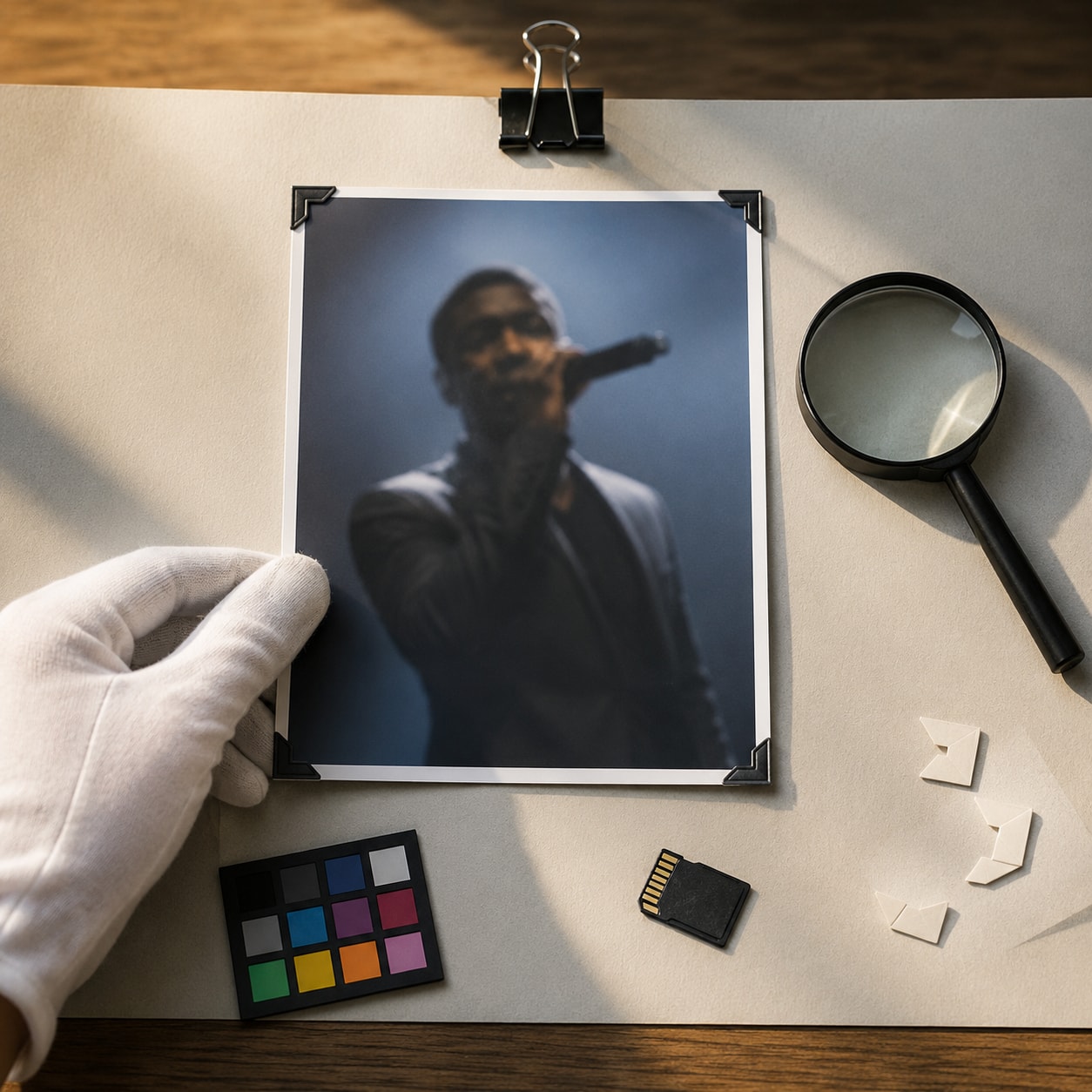
A practical method for investigating the source and context of an image described as the “Akon Image,” while keeping its identity, origin, authenticity, and connection to Akon explicitly unverified.
What the available evidence does—and does not—establish
The supplied evidence does not establish the identity, origin, publication date, authenticity, event, or context of the image described as the “Akon Image.” It also does not verify that the image depicts or is otherwise connected to Akon.
The only captured platform page that might have provided original media did not expose verifiable video content. Instead, it displayed a “Sign in to confirm you’re not a bot” requirement. Because the underlying media could not be inspected, it cannot support conclusions about what appeared in the video or how any image was presented.
This distinction matters: a blocked page is not evidence that the associated claim is true or false. It means the available material is insufficient for verification. Until an accessible copy or a dependable source provides the missing context, the image and claims attached to it should be described as unverified.
Start by separating the image from the claim attached to it
Begin by recording the exact claim rather than evaluating a vague impression. A claim might concern who appears in an image, when or where it was created, what event it depicts, whether it was altered, or why it was published. These are separate questions and may require different evidence.
Next, distinguish two possible problems with a citation:
– Questionable source reliability: The cited source may not be dependable enough to support the claim. – Failed verification: The cited source can be opened, but the information attributed to it cannot be found there.
This distinction is reflected in Wikipedia’s guidance for its “Unreliable source?” template, which separates doubts about a source’s reliability from cases in which the claimed material cannot be located in the source. The latter is treated as a verification failure.
For the “Akon Image,” write each alleged detail separately and mark whether the cited material actually contains it. Do not treat a link, caption, or repeated attribution as confirmation by itself. If the supporting content is unavailable or does not contain the stated information, record that detail as not verified.
Use reverse image search to look for earlier copies and possible sources
Reverse image search can help locate visually similar images, possible original sources, and copies that may have been modified. It is a discovery method: its results can provide leads, but they do not independently prove who appears in an image or whether a caption is accurate.
Search results should be compared carefully. Look for versions that appeared earlier than the copy under review, pages that provide publication context, and visible differences among copies. A similar result may indicate that an image was reused, cropped, or otherwise changed, but the result still needs to be connected to a source that supports the specific claim being investigated.
One Chrome Web Store listing describes a Reverse Image Search extension that uses TinEye and Google Images. According to that listing, users can initiate searches with an image URL or by capturing a region of a webpage. These features may make it easier to submit an image that is difficult to isolate.
The listing is evidence of the vendor-described functionality, not proof of the extension’s effectiveness or of any conclusion about the target image. Treat each result as a lead. Then open the associated source when possible and check whether it supplies the identity, date, event, and publication context being claimed.
How to search when the image is embedded or appears inside a video
An image may be part of a page design, embedded in the background, or visible only within a video frame. In those situations, a standalone image file may not be readily available.
The documented Reverse Image Search extension provides two relevant vendor-described options: searching from an image URL and capturing a selected region of a webpage. A URL may be useful when the page exposes a direct image address. A region capture may help isolate the relevant visual when the image is embedded in a larger page or appears as only one part of the displayed media.
Before searching, capture only the relevant visual area when possible. Search results can then be examined for similar or earlier copies and possible source pages. However, visual similarity does not establish authenticity, authorship, chronology, or the accuracy of an attached caption. Cropping or other modifications can also remove contextual information.
If a video frame cannot be accessed because the platform blocks viewing, do not reconstruct it from a description or assumption. Record that the underlying frame was unavailable and keep any related claim unverified.
Evaluate the source and verify that it supports the claim
Source verification requires two separate checks.
First, assess whether the source is suitable for the claim being made. A page that merely repeats a caption offers different support from a source that documents where and when an image was published. The existence of multiple copies does not resolve this issue if every copy repeats the same unsupported attribution.
Second, inspect the cited material and confirm that it actually contains the information attributed to it. Wikipedia’s template guidance distinguishes a reliability concern from a failed verification: if the alleged information cannot be found in the source, that is a different problem from deciding whether the source itself is trustworthy.
Apply the checks to each element of the “Akon Image” claim:
– Does the source identify the person shown? – Does it state when and where the image originated? – Does it connect the image to the alleged event or explanation? – Can those statements actually be located in the cited material?
The research supplied here does not answer those questions about the target image. Therefore, none of its alleged identifying or contextual details should be presented as established facts.
What to do when a platform blocks access
Sign-in requirements and anti-automation checks can prevent inspection of original media. In the available research, the captured YouTube page displayed “Sign in to confirm you’re not a bot” and did not provide verifiable video content.
When this happens, document the access limitation precisely. Separate what the page actually displayed from what the inaccessible media was alleged to contain. A title, surrounding description, or secondhand account cannot substitute for inspection of the blocked content unless another accessible source independently supplies the relevant evidence.
Do not infer the missing frames, narration, or context. The appropriate finding is limited: the media could not be verified through the captured page. If an accessible copy is later found, it should still be checked to determine whether it is the same media and whether it supports the particular claim. Until then, label the unresolved details as unverified.
Interpret search tools and their limitations carefully
Search tools can assist with finding copies, but their listings and ratings do not validate their results. The Chrome Web Store page for the documented Reverse Image Search extension says it uses TinEye and Google Images and supports searches by image URL or captured webpage region.
The same listing showed version 0.3.0, an update date of August 10, 2021, and a rating of 3.3 out of 5 from 14 ratings. These details describe the store page at the time represented by the research. They do not independently demonstrate current performance, accuracy, safety, or effectiveness.
Likewise, a match returned by a search tool is not a verdict on the “Akon Image.” It may point to a similar copy or a possible source, but the surrounding source must still be inspected. The available product-page information is also relatively old, so it should not be used to make unsupported claims about the tool’s present condition.
Use such tools to generate leads, then evaluate the resulting sources and verify that they contain the claimed information.
A cautious decision framework before sharing the image
Before sharing or relying on the image, classify each finding rather than forcing a single overall verdict:
– Supported: An accessible source contains the specific information attributed to it, and the source is suitable for that claim. – Uncertain: A possible match or source has been found, but important details remain unresolved. – Not verified: The cited information cannot be found, the underlying media cannot be accessed, or the available evidence does not establish the claim.
For the supplied “Akon Image” material, the identity, origin, authenticity, event, and connection to Akon belong in the not-verified category. The available platform page was blocked by a sign-in or anti-automation requirement, while the other sources explain verification concepts and search methods rather than documenting the image itself.
A practical sequence is to document the exact claim, search for earlier or similar copies, inspect any possible source, and check whether that source actually contains the asserted details. Reverse image search can assist with discovery, including when an image URL or captured page region is used, but it cannot by itself establish authenticity or context.
This cautious process fits a broader online-safety need. Microsoft’s global online-safety survey covered more than 14,797 parents, teenagers, and other adults across 15 countries and asked about 12 online risks in six categories. That survey provides general background for taking online risks seriously; it does not verify this image. If essential details remain unresolved, label them unverified and avoid presenting assumptions as facts.
Disclosures and limitations
– This article was prepared with AI assistance from the supplied Content Plan and Research Package and should be reviewed by a human editor before publication. – The article relies only on the supplied browser-acquired source summaries: a Microsoft online-safety survey reference, a Chrome Web Store extension listing, Wikipedia template guidance, and a captured YouTube access-block page. These materials do not verify the target image or its alleged connection to Akon. – No product is recommended in this article, and no affiliate relationship or compensated endorsement is represented. The browser-extension details are included only as an attributed example of vendor-described search functionality.
Sources
– Image (Java Platform SE 8 ) — docs.oracle.com – – YouTube — youtube.com – Reverse Image Search – Chrome Web Store — chromewebstore.google.com – Digital Safety | Global Online Safety Survey Results — microsoft.com – How to Verify Professional Social Media Profiles — linkedin.com – Template:Unreliable source? – Wikipedia — en.wikipedia.org – Fused location bootloop · Issue #83 · MuntashirAkon/android-debloat-list — GitHub – iStock — istockphoto.com – EU-US data transfers — European Commission – CanvasRenderingContext2D: drawImage() method – Web APIs | MDN — developer.mozilla.org