
Retail pharmacy technician roles generally emphasize prescription processing, insurance questions, payments, and direct customer contact. Hospital roles more often involve preparing medications for inpatient care and coordinating with pharmacists and nursing staff. The better fit depends on your preferred duties, communication style, experience, and applicable state and employer requirements.
Hospital vs Retail Pharmacy Technician Careers at a Glance
Hospital and retail pharmacy technicians share a responsibility to support medication-related work under a licensed pharmacist, but their daily settings differ.
Retail technicians commonly fill prescriptions, prepare labels, accept payments, address insurance-related questions, and perform clerical tasks involving insurers or physicians’ offices. Direct customer interaction is therefore a central consideration. Retail jobs are described as widely available, and some offer flexible hours.
Hospital technicians generally prepare medications for inpatient care and work closely with pharmacists and nursing staff. Exact responsibilities and hiring standards can vary among hospitals, departments, and individual positions.
Neither setting is universally better. Retail may suit someone comfortable with frequent customer communication and administrative questions. Hospital work may appeal to someone interested in inpatient medication support and collaboration with a health care team. The available evidence does not establish a direct comparison of pay, benefits, or schedules, so those factors should be checked in current local postings.
Daily Duties and Work Environment
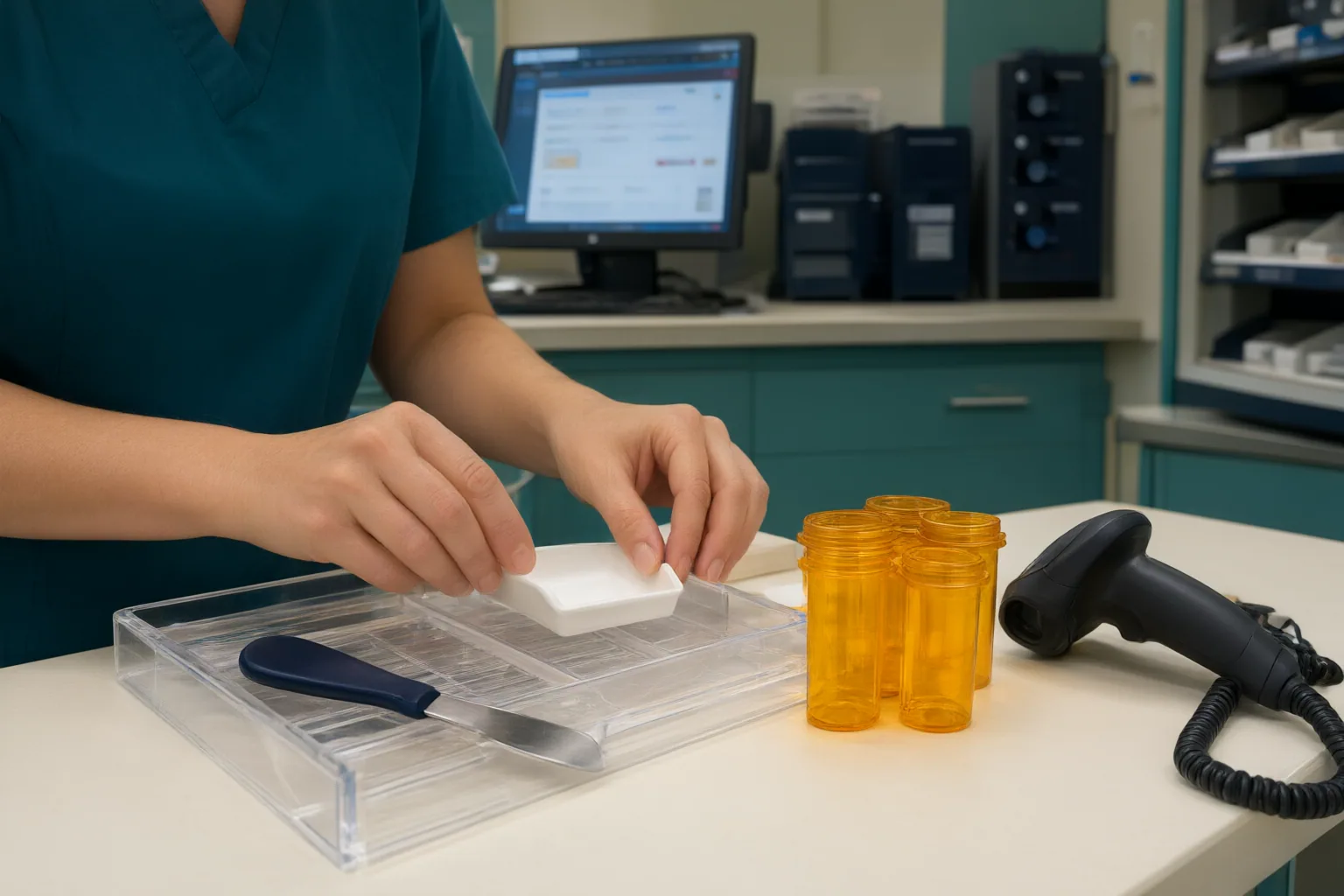
In a retail-facing role, the workflow can include receiving prescriptions, filling and dispensing medications, preparing labels, processing payments, handling insurance questions, and completing related clerical work. Communication matters because technicians may interact directly with customers while also coordinating with insurers and physicians’ offices.
Hospital pharmacy technician duties are centered more on preparing medications used in inpatient care. These technicians may coordinate closely with pharmacists and nursing staff, placing their work within a team serving hospitalized patients. Duties can differ by hospital and department, so the title alone may not reveal the complete scope of a position.
In both environments, technicians work under a licensed pharmacist. They cannot provide medication advice or consultations that are reserved for pharmacists. Applicants should therefore distinguish between supporting prescription and medication workflows and making professional judgments outside a technician’s permitted role.
When comparing openings, examine the listed tasks instead of relying only on the workplace label. A retail applicant should note the amount of customer, insurance, payment, and clerical work. A hospital applicant should look for details about inpatient preparation, departmental assignment, and collaboration with clinical staff.

Skills, Training, and Entry Requirements
Attention to detail is important across pharmacy technician work. Communication and familiarity with pharmacy software are also commonly requested. The relative importance of customer service may be especially visible in retail roles, where technicians can face customers directly and help address insurance questions.
Training expectations are not uniform. Some job listings include on-the-job training, which can make them more accessible to entry-level applicants. Other openings—particularly certain hospital or specialty positions—may seek prior experience. A candidate should read each posting for required experience rather than assuming every retail role is entry-level or every hospital role has the same threshold.
Legal and employer requirements also need separate review. Registration, licensing, or certification rules vary by state, while employers may set additional requirements for a particular job. Meeting the conditions for one position does not by itself establish eligibility for another role or location.
A practical comparison should cover four questions: What duties are listed? How much customer interaction is involved? Does the employer provide training or request prior experience? What current state and employer credentials apply? Answering these questions helps separate personal fit from basic eligibility. It also prevents assumptions based solely on the words “hospital” or “retail.”
Conclusion
Choose between hospital and retail pharmacy technician work by matching the documented responsibilities to your strengths and current experience. Retail work may be a closer fit if you are comfortable with direct customer contact, insurance questions, payments, prescription processing, and clerical coordination. Hospital work may be more appealing if you prefer inpatient medication preparation and close collaboration with pharmacists and nursing staff.
Keep the boundaries of the comparison clear: duties and requirements vary by employer, hospital department, position, and state. A workplace category cannot confirm the exact tasks, training offered, credentials needed, or experience expected.
As your next step, compare several current local job postings, verify your state’s registration, licensing, or certification rules, and identify which setting best matches your skills, experience, and preferred type of daily interaction.
Disclosures and limitations
- This article was prepared with AI assistance using the supplied research package, which summarized material attributed to JobRx and PharmacyTechSchools.com. Readers should verify current state rules and employer requirements with the relevant authorities and organizations.
Related reading
- Pharmacy Technician Pay and Job Guides
- Pharmacy Technician Career Advancement: A Practical Path to Certification, Specialized Skills, and Management Roles
- Pharmacy Technician Salary and Job Outlook: What the Available Evidence Shows
Sources
- Pharmacy Technician Jobs Near Me | Local Careers | JobRx — jobrx
- Pharmacy Technician — pharmacytechschools.com
- Pharmacy Technician Exam Study Guide 2026–2027: What the Certification Exam Actually Tests, with Practice Questions, Detailed Answer Explanations and Real Test Strategy by Conrad J. Merritt – Audiobooks on Google Play — play.google.com
- Frequently Asked Questions — CareerStep
- Pharmacy Technician Salary 2026: $17-$32/hr Real Pay Data — SalaryClear