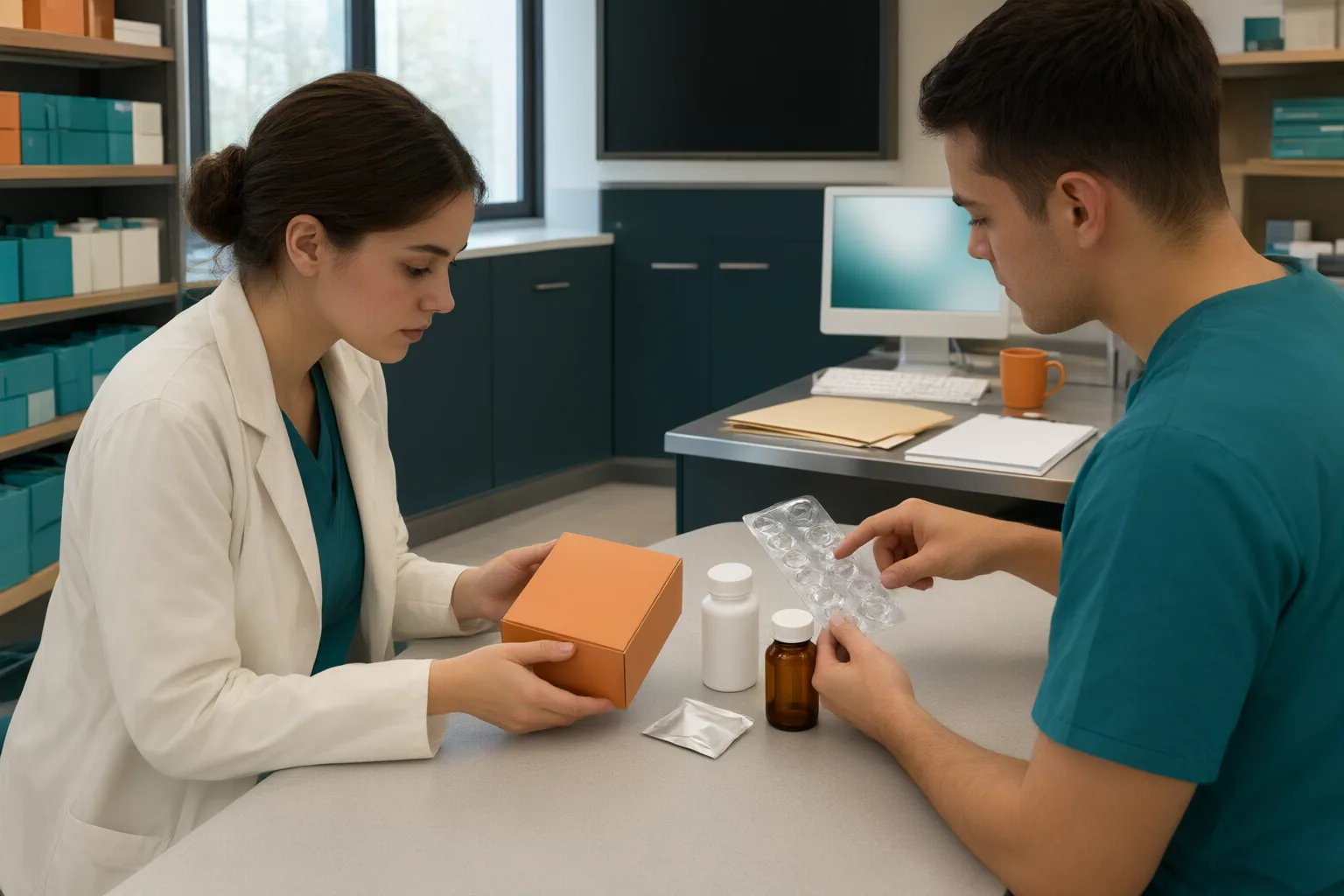
Trainees can compare packaging layers, container structures, apparent materials, readable printed information, and closure features in photographs. These observations create a consistent visual-inspection framework, but they cannot safely establish a medication’s identity from appearance alone.
Start With the Packaging Layer
Begin by determining which packaging layer the photograph shows. Primary packaging directly contains or touches the product. Secondary packaging groups or surrounds primary packages, while tertiary packaging supports bulk handling, transportation, and warehousing.
This distinction provides context for the comparison. A close-up might show a primary container, whereas another photograph might show only an outer carton or a larger transport package. Those images represent different layers and may expose different details.
Record the visible layer before comparing other features. If the photograph does not reveal whether a package directly contains the product, describe only what can be seen instead of assigning the layer with certainty. For example, note that the image shows an outer container without assuming what is inside it. This approach keeps the observation separate from an unsupported conclusion.
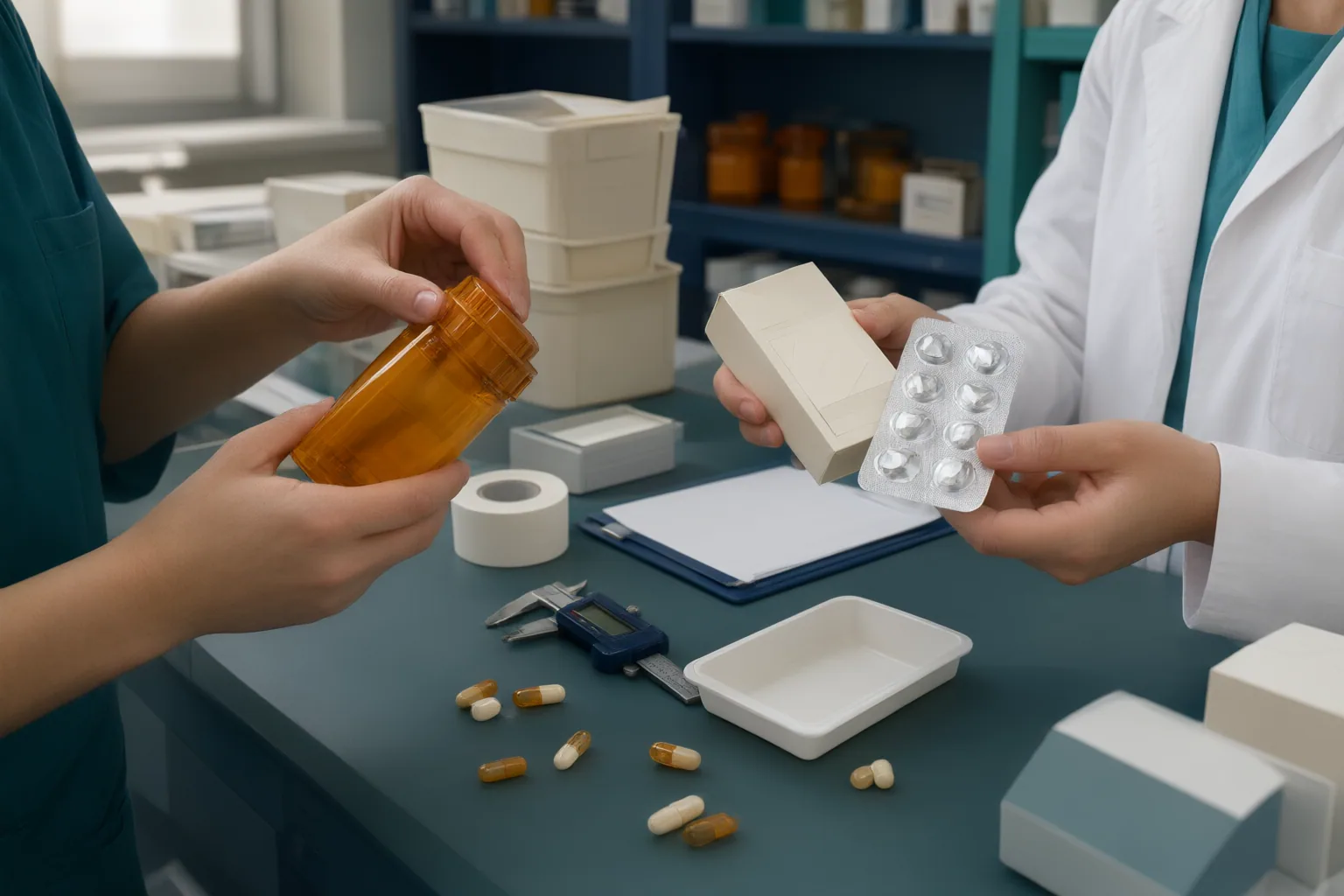
Compare Structure, Material, and Printed Information
Next, divide the visible evidence into three categories: structure, apparent material, and readable printed information.
Packaging structures can include bottles, cartons, pouches, cans, and other containers. Name the structure as specifically as the photograph permits. If only part of a package is visible, a limited description such as “rectangular outer package” may be more appropriate than a confident classification.
Packaging materials can include paperboard, plastic, glass, and metal. In a photograph, however, reflections, image quality, and an incomplete view may make the material uncertain. Record it as an apparent material when the image does not provide enough evidence for a definitive statement. Two packages that seem to use different materials can be documented as visually different without treating that difference as proof that they contain different medications.
Primary packaging may display information such as ingredients, instructions, and expiration dates. When this information is legible, transcribe it carefully and distinguish the printed wording from your own description. When it is blurred, cropped, covered, or too small to read, mark it as unreadable rather than guessing.
A simple comparison record can therefore include the visible packaging layer, structure, apparent material, and each legible piece of printed information. These details help trainees examine photographs systematically. The supplied sources do not establish that any one of them—or any combination of them—can conclusively identify a medication product.

Inspect Closures and Access Features
Closures and access points provide another category of visible details. General packaging examples include screw caps, cork stoppers, pump dispensers, resealable zippers, tear notches, and wide- or narrow-mouth openings.
Describe the feature itself and its location. For example, record that a container appears to have a screw cap or that a pouch has a visible tear notch. If the opening can be seen, note whether it appears wide or narrow. If the photograph hides the access point, state that it is not visible.
Use neutral wording and avoid inferring the product’s identity, contents, or safety from the closure. A closure feature can help distinguish what two photographs visibly show, but the supplied evidence does not make it a conclusive medication identifier. Precise description is more defensible than interpreting what the feature supposedly means.
Conclusion
Use the same sequence for every photograph:
- Determine whether the image shows primary, secondary, or tertiary packaging—or record that the layer is uncertain.
- Note the container structure and apparent material.
- Transcribe only printed information that is genuinely legible, including any visible ingredients, instructions, or expiration date.
- Record closure and access features without inferring the contents.
This sequence turns a photograph into an organized set of observations. It does not turn appearance into proof of medication identity. The available evidence consists of general commercial packaging guidance, not authoritative medication-labeling or pharmacy-training standards, so the framework should remain limited to visual comparison.
When reviewing a medication-related photograph, use the checklist, separate visible facts from uncertainty, and verify any proposed identity through an authoritative label or an approved workplace reference rather than relying on appearance alone.
Disclosures and limitations
- This article was prepared with AI assistance from the two supplied general commercial packaging sources. Those sources support a visual-comparison framework but are not authoritative medication-identification or pharmacy-training references.
- No products are recommended, and no affiliate relationship or purchasing claim is presented.
Related reading
- Medicine Image Context
- How Pharmacy Technician Students Can Verify the Original Context of a Medication Image
- How Pharmacy Technicians Can Maintain Accuracy During Interruptions and Task Switching
Sources
- 7 Types of Packaging With Examples | Complete Guide 2026 — Paper Mart Blog – Boxes, Bags, Ribbon, Tulle and More
- What Is Packaging? A Complete Guide for Beginners and Businesses — Pack Legacy