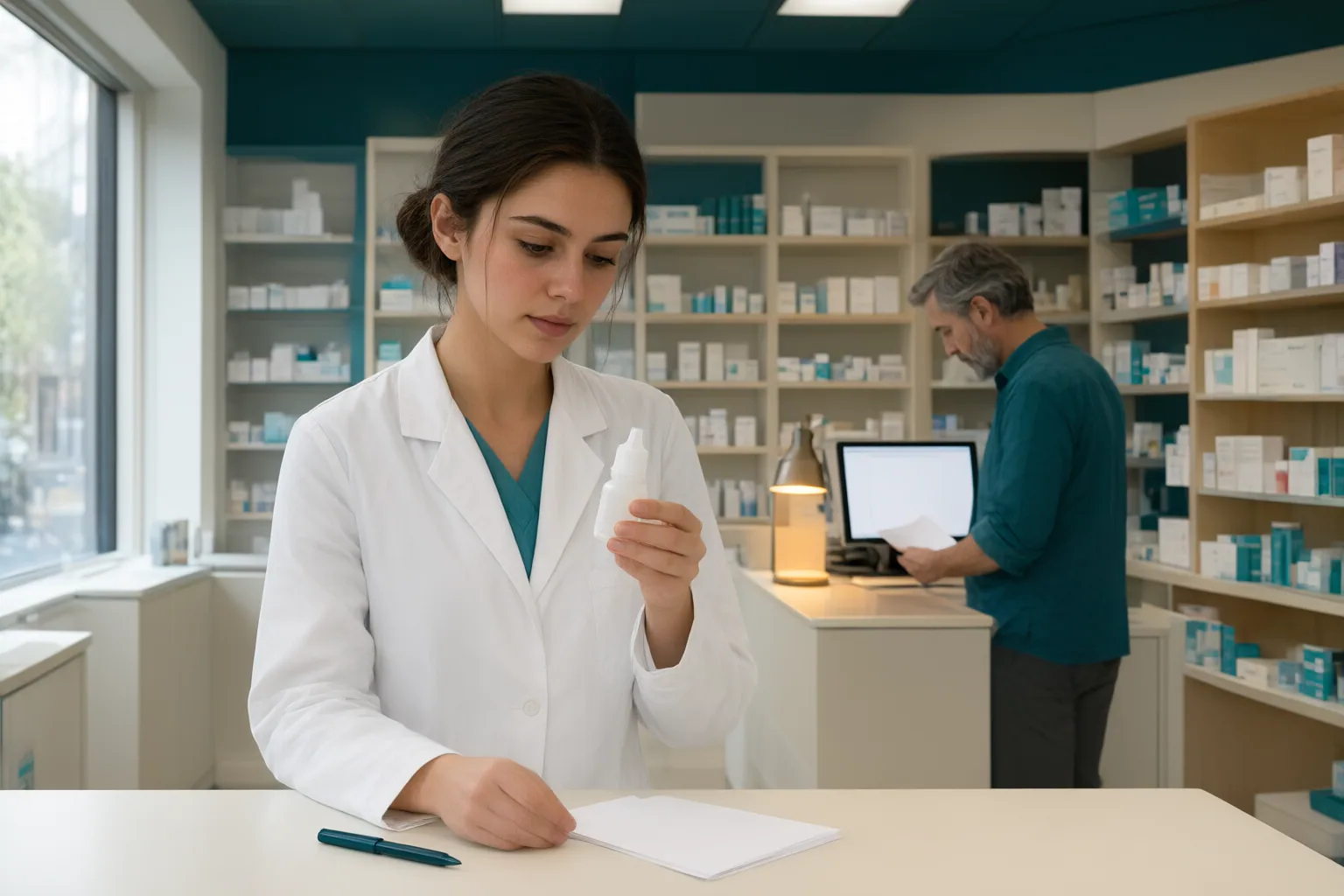
A reported 2026 recall covers specific lots of several eye-drop and ointment products—not every item sold under the named brands. Pharmacy technicians should match the product, lot number, and expiration date against the current official FDA record, then follow the supervising pharmacist’s directions and their employer’s recall procedure.
What the 2026 Eye-Drop Recall Covers
Sterling Pharmaceutical Services initiated the reported recall on August 20, 2026, because of a lack of assurance of sterility. The FDA subsequently classified it as Class II on September 21. The reports describe nine product listings totaling 747,844 units, including lubricant eye drops, a hypertonicity ophthalmic solution, and a nighttime eye ointment sold under several brand names.
“Lack of assurance of sterility” does not establish that contamination was detected. It means sterility could not be assured. That distinction matters when technicians explain the recall: staff should accurately communicate the stated reason without adding unsupported claims about contamination or patient harm.
A Class II classification means use of or exposure to a recalled product may cause temporary or medically reversible adverse health consequences, or that the probability of serious adverse consequences is remote. This definition does not replace patient-specific clinical guidance.
The supplied information comes from news reports rather than the underlying FDA enforcement record. Before publication or workplace action, confirm the affected products and current recall status using the official FDA record.
How to Identify Affected Eye Drops Accurately
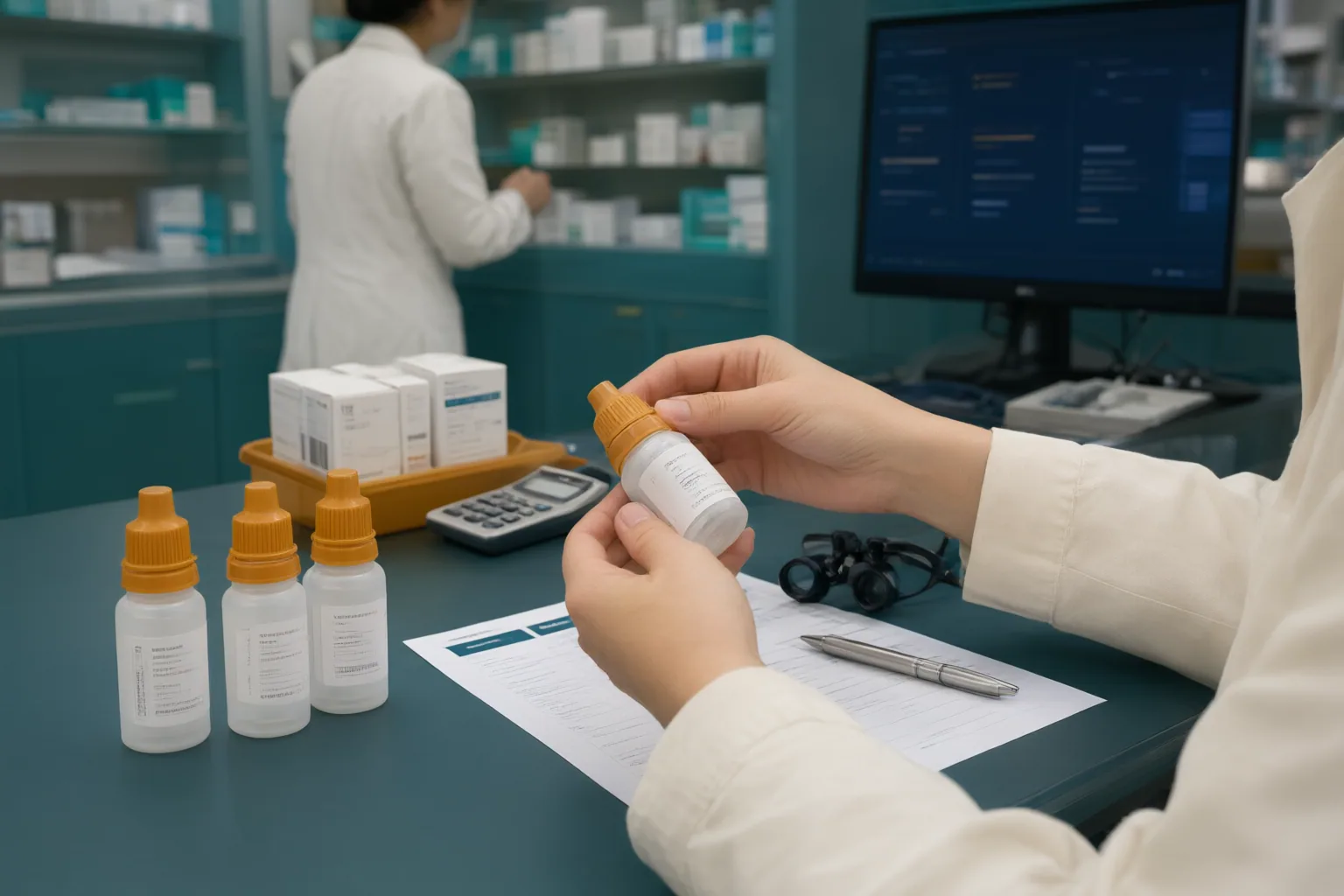
Do not treat the recall as applying to every product under a named brand. The reports say only specified lots and expiration dates are included. Accurate identification requires a three-part match: the product identity, the lot number, and the expiration date. A shared brand name alone is not enough.
Read the package label carefully and compare all three details with the current official recall information. Store-brand labeling and different package configurations, including single bottles and twin packs, may make affected inventory easier to overlook. If any identifying detail is missing, unclear, or inconsistent, pause and refer the item to the supervising pharmacist rather than guessing.
It is also important to distinguish this event from other eye-drop recalls reported during 2026. The supplied reporting separately describes a nationwide recall involving 39,060 Clear Eyes bottles and another involving more than two million prescription prednisolone acetate eye-drop bottles. Those figures concern different recall events and should not be used to decide whether a package belongs to the Sterling recall.
For each package under review, use the exact recall entry that applies to that event. Keeping the events separate helps prevent two opposite errors: overlooking an affected lot or incorrectly removing unaffected stock merely because its brand or product category sounds familiar.
What Pharmacy Technicians Can Tell Customers
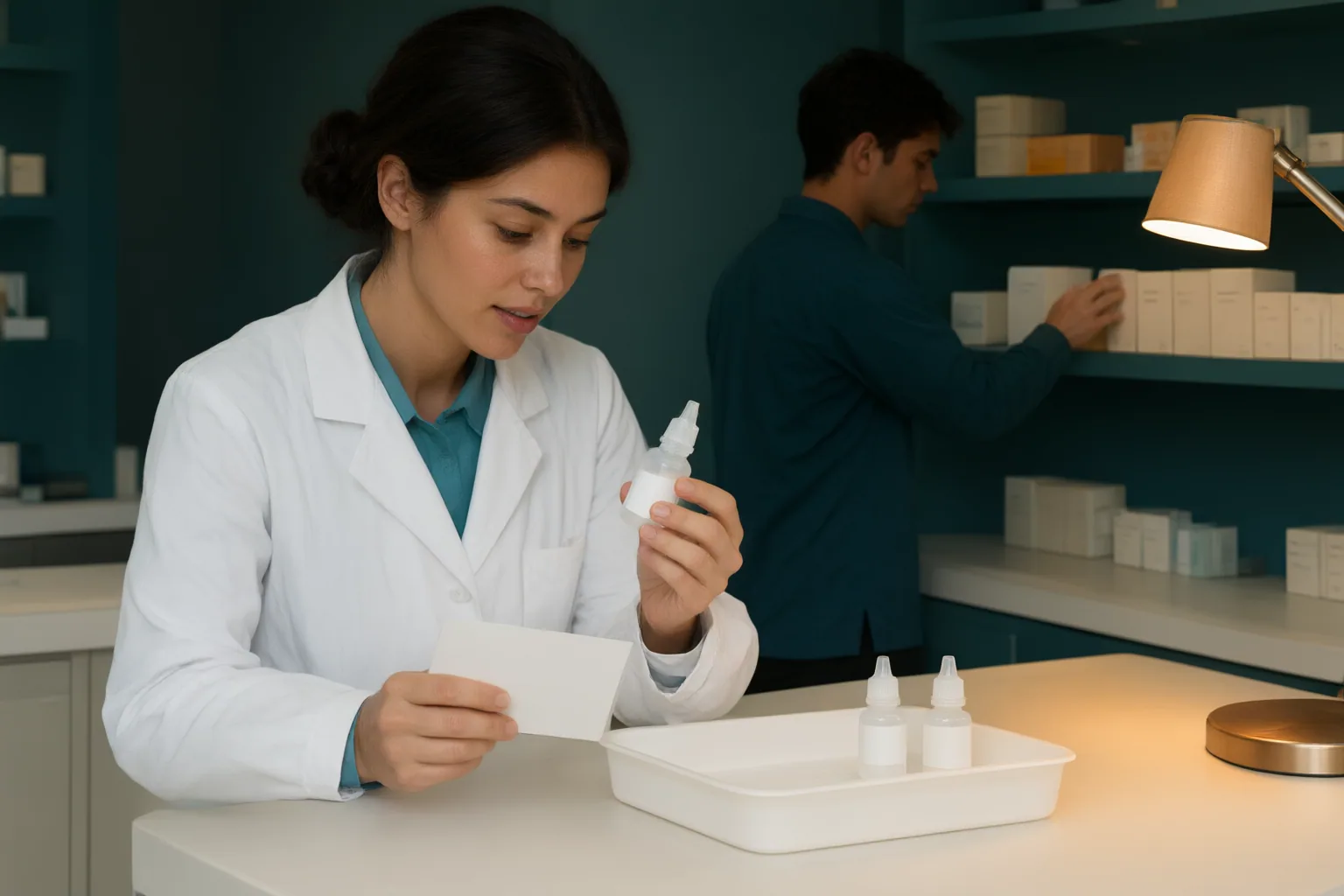
The supplied reports support several clear, limited messages for customers. If a product matches the recalled product identity, lot number, and expiration date, the customer should not use it. A customer who has already used a matching product should consult a doctor. One report also advises customers to ask the retailer about its refund policy.
Keep the conversation within those evidence boundaries. The recall classification and stated sterility concern do not provide enough information for a technician to assess an individual customer’s symptoms, predict an outcome, recommend treatment, or decide whether another medication is appropriate. Clinical questions should go to the pharmacist or the customer’s clinician.
The reports also do not establish a particular pharmacy’s steps for quarantining, documenting, notifying, returning, or disposing of recalled stock. Those operational duties depend on the supervising pharmacist’s direction, the employer’s documented procedures, and applicable requirements. A technician can help collect and compare package details, but should escalate uncertain matches and handling decisions instead of improvising a process.
When speaking with customers, identify which label details were compared and avoid saying that an entire brand has been recalled. Precise wording reduces confusion while keeping the guidance consistent with the lot-specific information in the reports.
Conclusion
The central task is exact identification: match the product identity, lot number, and expiration date, and do not assume that every product under a named brand is affected. Keep this sterility-assurance recall separate from unrelated 2026 eye-drop recalls, and describe the stated reason without claiming that contamination was found.
Technicians should refer clinical questions and uncertain product matches to the supervising pharmacist. Workplace actions such as quarantine, documentation, return, or disposal should follow pharmacist direction and the employer’s procedure. Before acting, check every potentially affected package against the current official FDA recall record, then follow the supervising pharmacist’s directions and your employer’s documented recall process.
Disclosures and limitations
- This article was prepared with AI assistance from the supplied research package and approved content plan. Its recall facts are attributed to the listed news-report sources; affected-product details and current status should be confirmed against the official FDA record.
Related reading
- Medicine Image Context
- How Entry-Level Pharmacy Technicians Can Evaluate Supervision and Feedback Practices
Sources
- Over half a million eye drops recalled. See affected products — USA TODAY
- FDA Announces New Massive Eye Drop Recall—Here’s the Full List of Products — Good Housekeeping
- Walgreens, AvKare and Four Other Eye Drop Brands Recalled Nationwide Over Sterility Concerns: Check Your Lot Numbers — Medical Daily
- FDA Announces Nationwide Recall of More Than 2 Million Bottles of Eye Drops — Good Housekeeping
- Nearly 40,000 bottles of eye drops recalled. See the affected product — USA TODAY