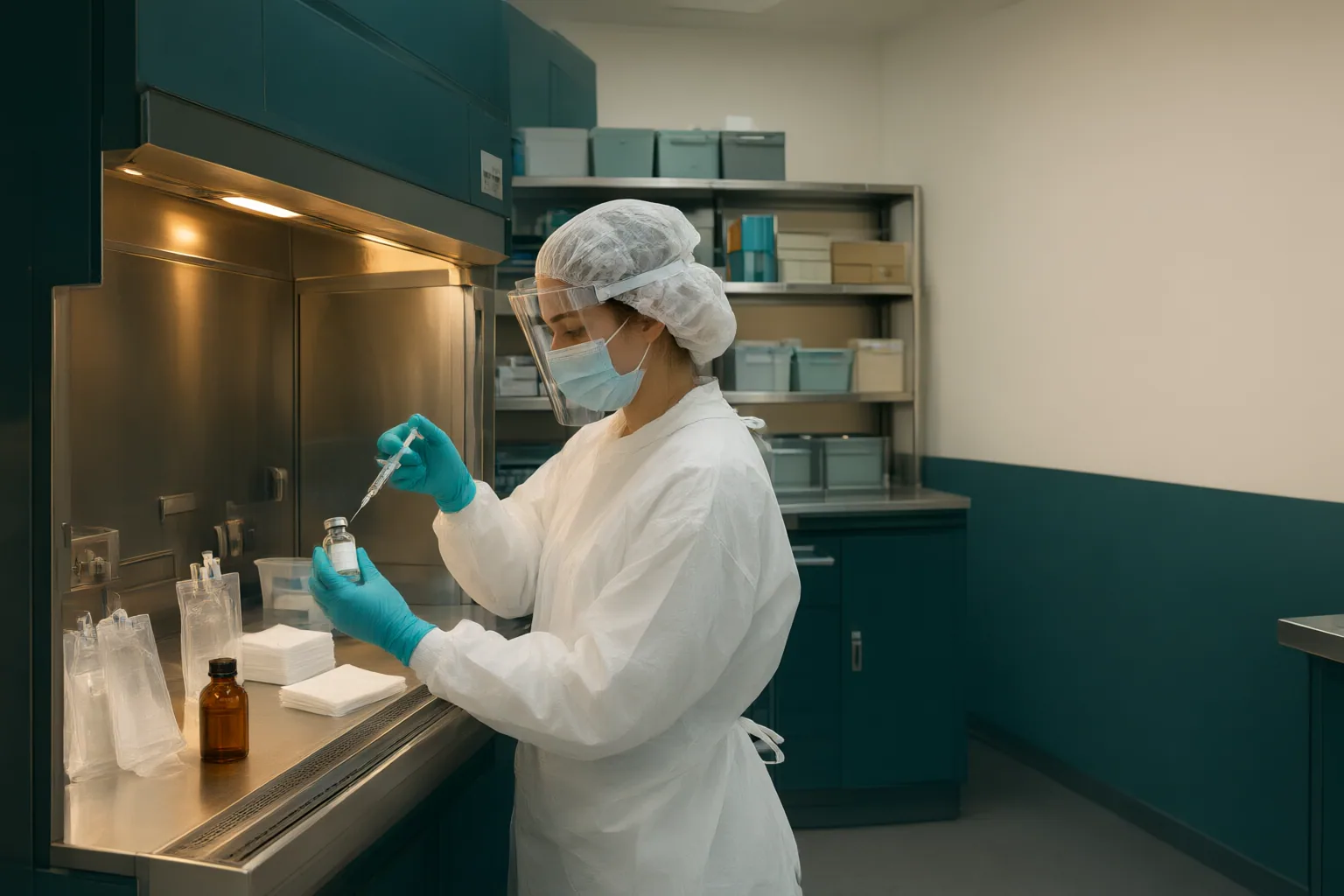
Look for training that connects USP <797> foundations with clearly described practical instruction, competency assessment, credential alignment, and the rules that apply in your state. No single course format or curriculum can be assumed to meet every learner’s or jurisdiction’s needs.
Start With Foundational Standards and Core Concepts
Begin by requesting the program’s written curriculum and checking whether it explicitly addresses USP General Chapter <797>, Pharmaceutical Compounding—Sterile Preparations. The Council on Pharmacy Standards identifies a module titled “Fundamentals of Sterile Compounding — USP <797>,” while NHIA says that most state laws and accreditation standards are based on principles in USP <797>. These references make the chapter a useful starting point when comparing course descriptions.
Next, look at how the program connects those principles to the preparation of compounded sterile preparations. NHIA describes preparing these products in accordance with federal, state, and industry standards as a core function of home infusion pharmacy practice. Ask the provider to identify the concepts it teaches, the learning outcomes students are expected to meet, and how the curriculum addresses sterile, accurate, and safe preparation.
Do not treat the presence of “USP <797>” in a course title as a complete curriculum guarantee. The available sources do not establish a universal checklist, minimum training duration, or nationwide eligibility standard. Compare the provider’s detailed materials instead of relying on a course name or a general claim that standards are covered.
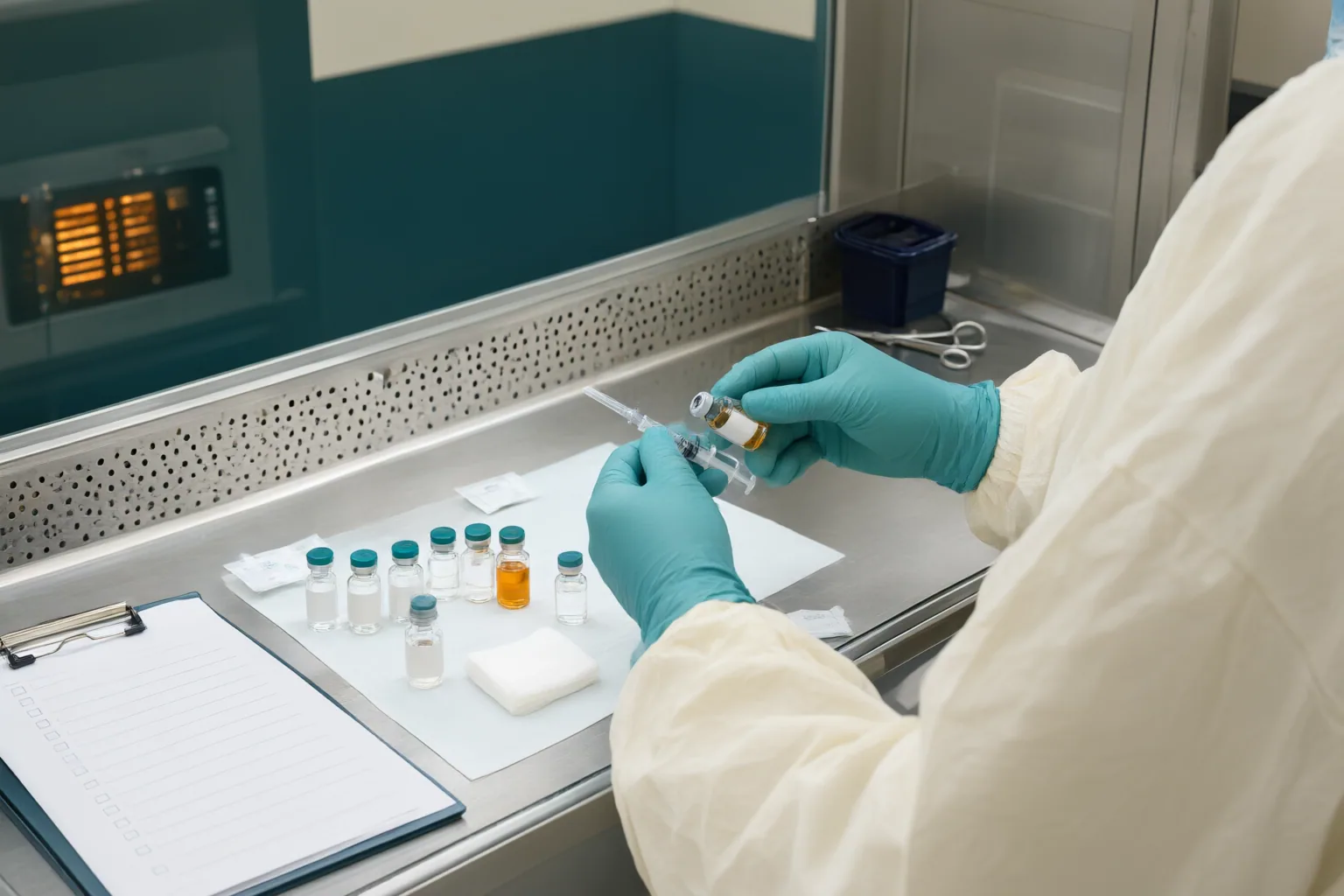
Check How the Program Develops Practical Competency
Training format is an important part of the comparison. NHIA lists options that include short webinars, advanced certificate training, and a four-day hands-on clinic offering continuing education credit. These formats differ in length and learning approach, but the supplied evidence does not show that any one format is sufficient for every student, job, credential, or state.
Ask exactly what students do rather than accepting “hands-on” as a complete description. Useful questions include whether practical work is supervised, which competencies students are expected to demonstrate, how performance is assessed, and whether students receive documented feedback. Also ask how foundational instruction and practical work relate to one another. A webinar may provide focused education, while a hands-on clinic is structured around in-person practice; an advanced certificate may represent a broader training path. The sources do not provide enough detail to compare their complete curricula, so obtain those details directly from each provider.
When comparing programs, record the delivery format, duration, stated outcomes, practical opportunities, assessment method, and continuing-education credit. This creates a consistent comparison without assuming that a longer option is automatically better. Students should match the format to their current knowledge and intended role while separately confirming employer, credential, and jurisdiction requirements.

Verify Credentials, Jurisdiction Rules, and Two Common Questions
Sterile-compounding education operates within rules that are not necessarily uniform across the United States. NHIA says oversight primarily falls to states and is typically administered by state boards of pharmacy. It also notes that the FDA has authority to inspect pharmacies for insanitary conditions. Because most state laws and accreditation standards are described as drawing on USP <797> principles, a course’s standards-based content can be relevant without proving that it satisfies every state-specific requirement.
Before enrolling, identify the state in which you expect to work and consult that state’s board of pharmacy. Ask the training provider to state in writing which jurisdictional requirements, if any, its course is designed to address. Avoid relying on broad phrases such as “compliant” or “approved” without identifying the relevant organization and the precise scope of the claim.
Credential statements also require careful reading. NHIA reports that its own hands-on Sterile Compounding Clinic is a PTCB-approved educational program for CSPT certification. That statement applies specifically to the NHIA clinic described by the source; it does not establish the status of other courses or guarantee that completing one course fulfills all certification or state requirements. Verify current claims directly with the relevant provider, credentialing organization, and state board.
Conclusion
Use a repeatable process to compare sterile-compounding training. Request the complete curriculum and confirm that it addresses USP <797> foundations. Identify whether the course is a brief webinar, advanced certificate, hands-on clinic, or another format. Then ask how practical competencies are taught, supervised, assessed, and documented.
Check any credential-alignment claim narrowly: determine which specific program, credential, and approving organization it concerns. Finally, verify the rules for the state where you plan to practice rather than assuming one course works nationwide.
Before enrolling, contact each provider for written curriculum and hands-on competency details, then confirm the applicable requirements with your state board of pharmacy.
Disclosures and limitations
- This article was prepared with AI assistance and is based only on the supplied Council on Pharmacy Standards and NHIA source material. Program details, credential claims, and state requirements should be confirmed with the relevant organizations before enrollment.
- This guide is educational and does not rank schools or endorse a particular program. No affiliate relationship or compensation information was supplied.
Related reading
- Pharmacy Technician Education Guides
- How Job Shadowing Can Help You Choose a Pharmacy Technician Work Setting Before Training
- How to Request Disability Accommodations During Pharmacy Technician Training and Credentialing Exams
Sources
- Module 5: Fundamentals of Sterile Compounding — USP – Council on Pharmacy Standards — pharmacystandards.org
- Sterile Compounding Resource Center |Best Practices and methods |NHIA — National Home Infusion Association