
College is not the only documented pharmacy technician training route. The available program information includes noncredit certificates, community-college courses, career-school diplomas, and an associate degree. The right option depends on your state’s rules, certification goals, preferred learning format, budget, and need for practical experience.
The Short Answer: College Is One Path, Not the Only Documented Option
The supplied evidence does not establish a universal requirement to earn a college degree before becoming a pharmacy technician. It documents several alternatives: Nebraska Methodist College advertises an eight-week noncredit certificate; Bucks County Community College offers a 75-hour program; American Career College describes a hybrid diploma that can be completed in as little as nine months; and South Texas College offers an Associate of Applied Science pathway.
These options should not be treated as interchangeable. Program completion, eligibility for a national certification examination, and state registration are separate milestones that may carry different requirements. Rules described by a provider in one state cannot be assumed to apply elsewhere.
Employer-based training may also be available in some settings, but the supplied research does not document a specific employer program or show that workplace training can replace approved education, certification eligibility, or state registration. Verify that possibility directly with the relevant state authority and employer before relying on it.
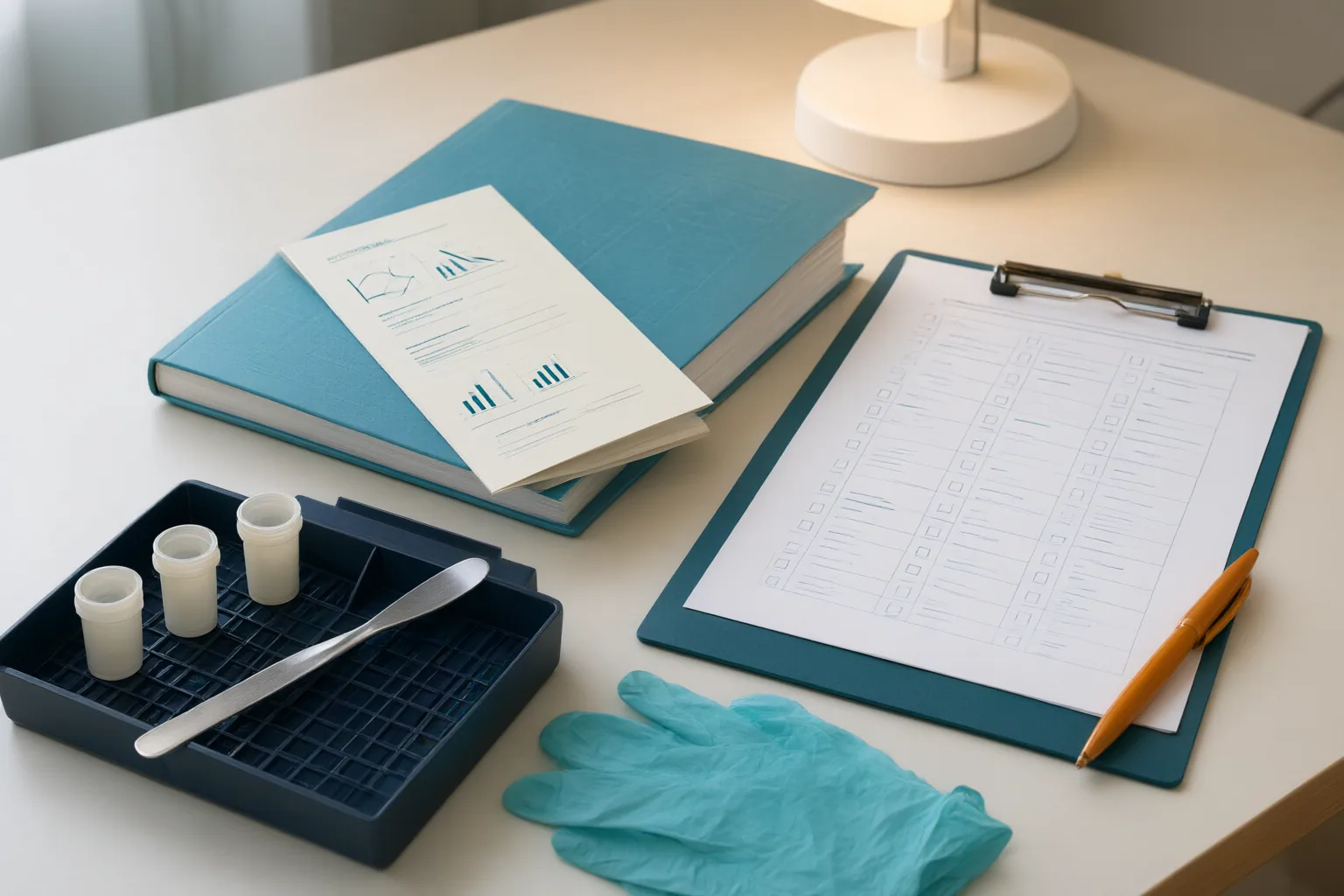
College, Certificate, and Diploma Programs Compared
Provider-reported examples show how widely pharmacy technician education can vary:
- Short certificate or community-college training: Nebraska Methodist College describes an eight-week program combining online study with an on-campus skills laboratory. Its published $650 price includes textbooks, a $129 PTCB examination fee, drug screening, and a background check, but excludes the Nebraska registry fee. Bucks County Community College lists a 75-hour program that prepares completers to take the PTCB examination; its tuition does not include that examination fee. The college says its fall 2026 hybrid schedule requires attendance at one in-person class and one live Zoom class each week.
- Online certificate: Washington Technical Institute lists a five-month, 240-hour online certificate costing $899 and says it prepares students for national examinations such as the PTCB exam. The supplied description does not document an externship or in-person laboratory, so applicants should ask how practical skills are taught and assessed.
- Career-school diploma: American Career College reports that its hybrid diploma can be completed in as little as nine months. The 800-hour, 48-quarter-credit curriculum includes a 320-hour externship. Ayers Career College describes a 36-week daytime program meeting Monday through Thursday, with simulated-pharmacy training, an externship, and preparation for the Pharmacy Technician Certification Exam.
- Associate degree: South Texas College publishes an estimated program cost of $14,258 for its Pharmacy Technology Associate of Applied Science, with daytime, hybrid, and online coursework. It reports ASHP/ACPE accreditation and PTCB recognition for CPhT and CSPT education or training.
These examples are comparisons, not rankings. Confirm current schedules, prices, recognition, and completion requirements with each provider before enrolling.

What to Verify Before Choosing a Training Path
Start with the rules that apply where you intend to work. Bucks County Community College says Pennsylvania requires approved training before an individual applies for registration, while South Texas College identifies Texas trainee registration and a fingerprint background check among its conditions for clinical participation. These examples demonstrate why requirements from one jurisdiction should not be generalized nationwide.
Next, request written answers to these questions:
- What does completion qualify me to do? Ask separately about receiving a school credential, becoming eligible for a certification examination, and completing state registration. A program’s claim that it provides examination preparation does not by itself establish that every regulatory step is complete.
- What recognition applies? Verify current accreditation, state approval, and certification-body recognition with the relevant organizations rather than relying only on promotional language.
- Where does practical learning occur? Compare on-campus laboratories, simulated pharmacies, and externships with fully online instruction. Confirm placement responsibilities, required hours, and whether attendance is fixed.
- What are the admissions and screening conditions? South Texas College lists a high school diploma or GED equivalent, college-readiness standards, a minimum 2.5 cumulative GPA, and age, background-check, drug-screening, and immunization conditions connected to clinical participation. Such requirements can affect eligibility and timing.
- What is the complete cost? Obtain an itemized total covering tuition, books, examination fees, registration fees, background checks, drug screening, and practical placements. Published tuition may include some of these expenses while excluding others.
Conclusion
The documented routes range from brief noncredit training to career-school diplomas and an associate degree, so college is one option rather than a proven nationwide requirement. The evidence is insufficient to determine when employer-based training can substitute for formal education or satisfy regulatory obligations.
Choose by comparing duration, delivery format, practical experience, admissions conditions, certification preparation, and full cost. Before enrolling, verify your state’s current training and registration rules, then ask every program for a written breakdown of tuition, additional fees, hands-on requirements, admissions conditions, and certification eligibility.
Disclosures and limitations
- This article was prepared with AI assistance from the supplied school and training-provider materials. Program costs, schedules, recognition, and regulatory details may change and should be independently verified with providers, certification organizations, and state authorities.
- No products are recommended and no affiliate relationship is represented in this article.
Related reading
- Pharmacy Technician Education Guides
- Pharmacy Technician Training Programs: What to Compare Before You Apply
Sources
- Pharmacy Technician – Washington Technical Institute — Washington Technical Institute – Online Career Training and Certification
- Pharmacy Technician Certification Program | NMC | Omaha, NE — methodistcollege.edu
- Pharmacy Technology — South Texas College
- Pharmacy Technician | Bucks County Community College — Bucks County Community College
- Pharmacy Technician School Las Vegas, NV | Northwest Career College — Northwest Career College
- Pharmacy Technician Program | Blended Healthcare Diplomas — American Career College
- Pharmacy Technician Training | Ayers Career College | Louisiana — Ayers Career College