
A strong pharmacy technician resume names job-relevant technical and transferable skills, then supports each one with accurate context from credentials, coursework, or documented work experience. Match your wording to the position, and never present a studied or exam-preparation topic as hands-on experience.
Pharmacy Technician Skills Employers May Look For
Relevant technical skills can span several parts of pharmacy work. Training materials identify pharmacology, pharmacy calculations, dispensing and prescription concepts, pharmacy operations, and regulatory requirements as important subject areas. They also describe work that may include helping process prescriptions under a pharmacist’s direction, maintaining patient records, and submitting insurance claims.
Another pharmacy-management program lists medical terminology, medication knowledge, compounding, sterile technique, inventory maintenance, IV preparation, label printing, unit-dose prepackaging, and supply inspection. These examples can help you recognize useful keywords in a job posting, but they are not a universal checklist. A retail role, for example, may emphasize different abilities from a position involving sterile preparation.
Describe only the level you can substantiate. If you encountered sterile technique in a course but did not perform sterile preparation in a workplace, write “coursework in sterile technique” rather than implying professional experience. Likewise, identify prescription support as work performed under appropriate supervision rather than suggesting independent authority. For each technical skill, note whether your support comes from education, supervised practice, a credential, or employment.
Communication, Judgment, and Other Transferable Skills
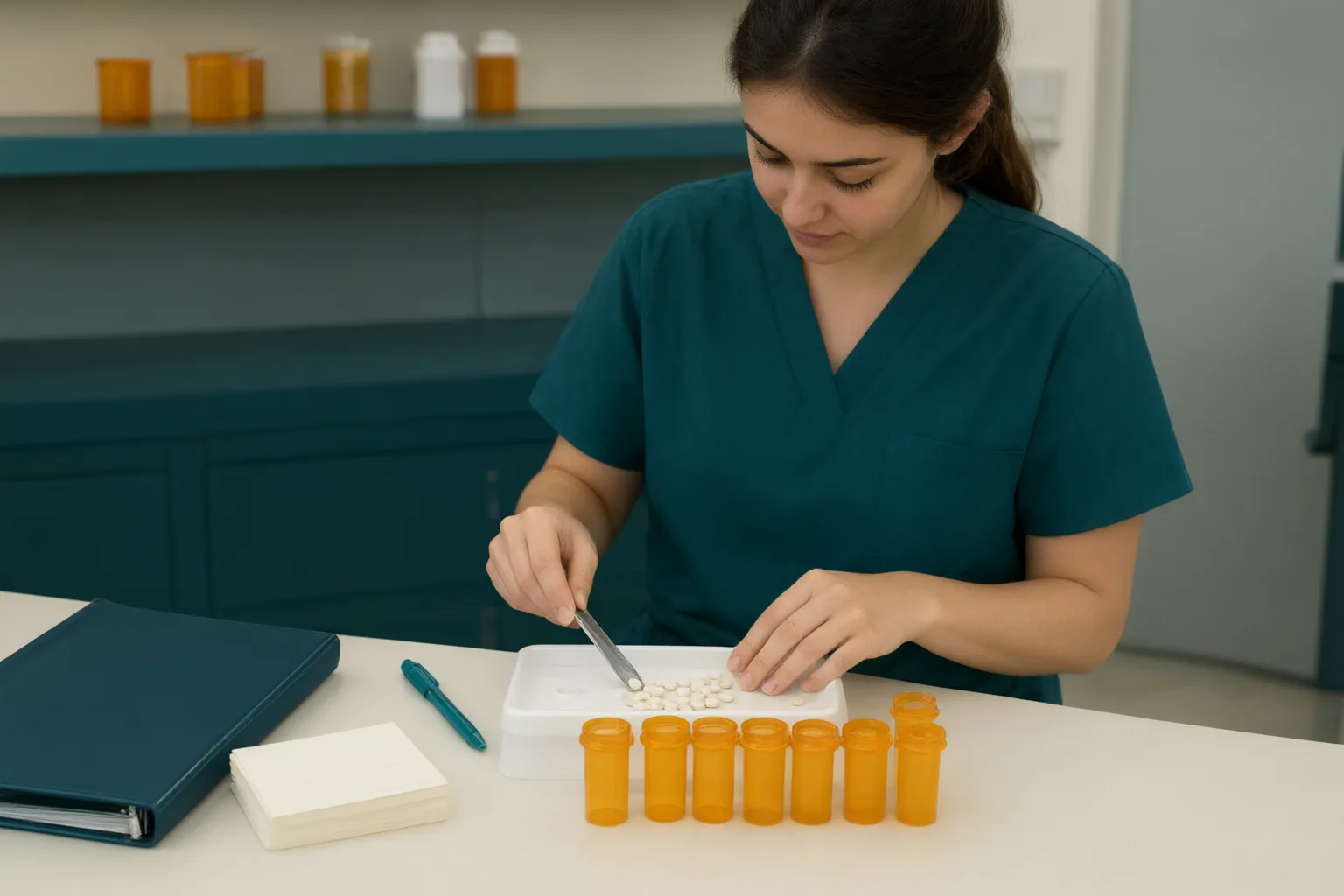
Technical knowledge is only part of the picture. Pharmacy-related coursework may also cover communication, critical thinking, professional ethics, legal responsibility, infection control, foundational mathematics, and leadership. Resume guidance additionally points to communication and problem-solving as soft skills worth presenting alongside credentials and core abilities.
Avoid an unsupported list of adjectives such as “excellent communicator” or “strong critical thinker.” Connect each transferable skill to a specific setting or activity you can verify. A student might refer to completing calculation work, applying infection-control procedures during supervised instruction, or collaborating on a course assignment. A career changer might draw on documented experience communicating accurately, handling sensitive records, checking inventory, or resolving routine process problems in another field—without describing that experience as pharmacy work.
Select examples that matter to the advertised position. The goal is not to include every possible trait, but to show where your behavior and preparation align with the role. Keep legal or ethical claims modest and factual: naming relevant coursework is more defensible than making a broad claim of regulatory expertise.
How to Present Skills in Your Summary and Experience
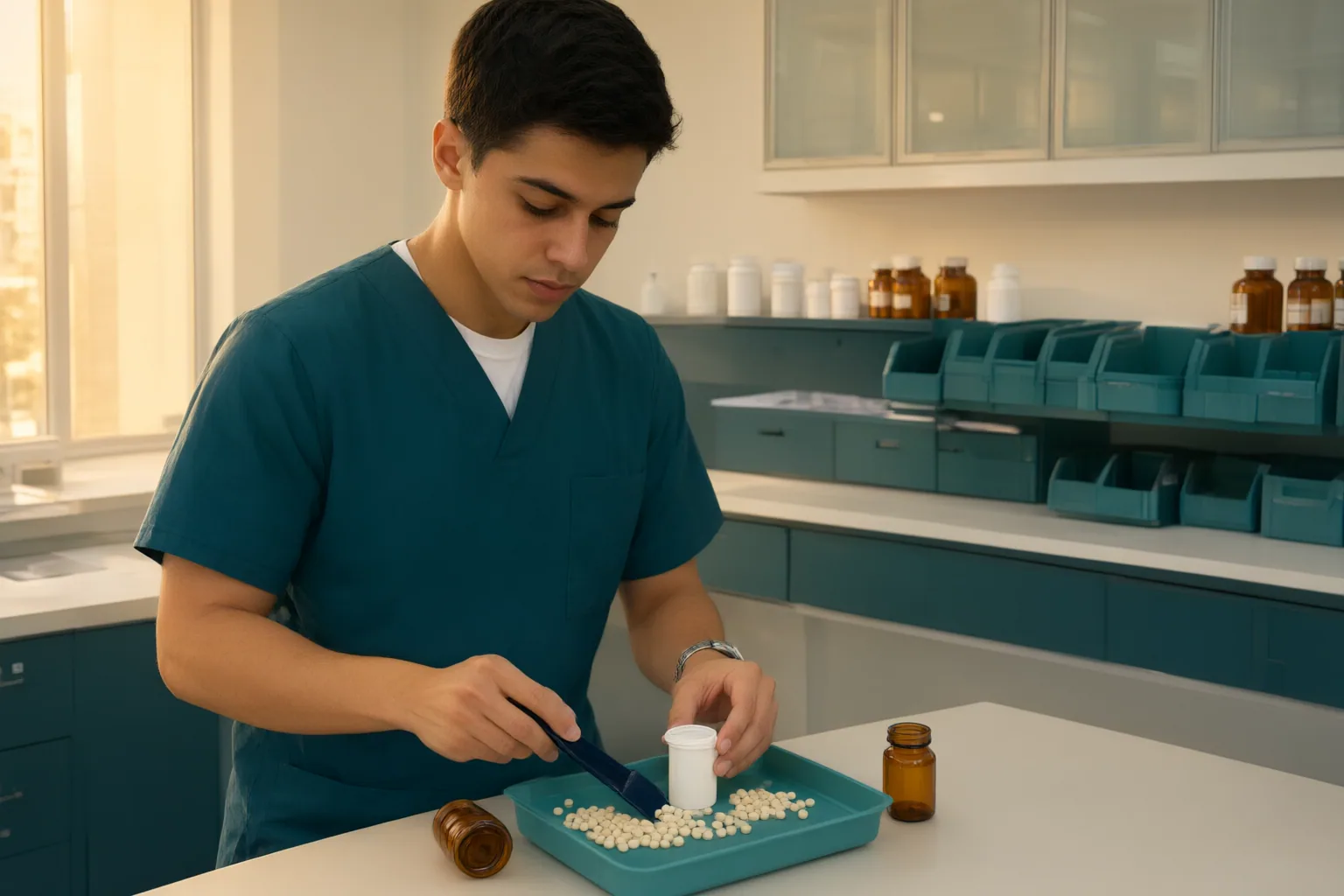
Resume guidance recommends prioritizing credentials, core skills, experience in a specific work environment, supported accomplishments, and relevant soft skills in a summary or objective. Use that space to give a compact account of what qualifies you for the target role rather than repeating a generic skills list.
For example, an entry-level applicant could identify relevant training and accurately name studied areas such as pharmacy calculations, medical terminology, prescription concepts, or inventory procedures. A current technician could instead emphasize the setting in which documented duties were performed, such as supporting prescription processing, maintaining patient records, or submitting insurance claims under a pharmacist’s direction. Include an accomplishment only when you have evidence for it; the supplied research does not establish universal benchmarks for prescription volume, accuracy, or other performance figures.
Use precise labels throughout the resume:
- Credential: State only a credential you actually hold, using its correct status.
- Training: Introduce course-based abilities with wording such as “coursework in,” “trained in,” or “studied.”
- Exam preparation: Treat patient safety, quality assurance, pharmacy technology, billing, order entry, compounding, and calculations as preparation topics when that is your only basis for mentioning them.
- Experience: Reserve action verbs that imply performance—such as prepared, processed, maintained, or submitted—for tasks you actually completed in the stated setting.
This distinction is especially important because an exam guide’s coverage shows what its materials address, not what a reader has mastered or performed at work. Tailor the order of your skills to the posting while preserving those evidence boundaries.
Conclusion
Build your pharmacy technician resume by comparing the job posting with your documented credentials, education, and experience. Choose the most relevant technical and transferable skills, label their source accurately, and add concrete context without inventing performance figures. Course coverage and certification preparation can demonstrate relevant study, but neither should be presented as employment experience.
Certification, licensing, and pharmacy requirements may vary, and the supplied sources are not official regulatory authorities. Verify any such claim with the appropriate official certification body, licensing board, or state source. Then audit every skill on your resume: revise its wording until you can support it with a credential, course record, supervised activity, or documented work example.
Disclosures and limitations
- This article was prepared with AI assistance using only the supplied research package, which draws on training-provider materials, a commercial resume guide, and an exam-guide product description. These sources are not substitutes for official certification, licensing, or state regulatory guidance.
Related reading
Sources
- Pharmacy Management Associate Degree – Become a Specialized Medical Assistant In Miami — Become a Specialized Medical Assistant in Miami
- Pharmacy Technician Exam Study Guide 2026–2027: What the Certification Exam Actually Tests, with Practice Questions, Detailed Answer Explanations and Real Test Strategy by Conrad J. Merritt – Audiobooks on Google Play — play.google.com
- Pharmacy Technician Program — CareerStep
- 20+ Pharmacy Technician Resume Summary Examples (2026) — ResumUp
- Doctor of Pharmacy Program – Appalachian College of Pharmacy — Appalachian College of Pharmacy